Tesla Roadster 2026: SpaceX Thrusters, Flight Physics, and the Science of the Ultimate Electric Supercar
📤 Compartilhe este artigo com o link curto:
Introduction
In October 2026, Tesla finally unveiled the long-awaited second-generation Roadster at SpaceX’s testing facility in McGregor, Texas. What began as a 2017 concept promising extreme electric performance has evolved into something far more radical: a production-bound electric sports car equipped with cold-gas thrusters developed alongside SpaceX, a multi-mode suction fan system capable of generating downforce at zero speed, and the ability to perform controlled aerial maneuvers. Elon Musk described it as “the best of the last of the human-driven cars,” a machine that deliberately pushes beyond conventional road-car physics.
This article examines the Roadster’s core functionalities, the advanced technologies that enable its performance, and the scientific principles that make short-duration flight and inverted driving possible. Readers will gain a clear understanding of the dual-motor powertrain, the cold-gas propulsion system, active aerodynamics, battery architecture, and the engineering trade-offs that define each trim level. Production is scheduled for 2028, with reservations already open for the road-legal Performance version.
Core Functionalities and Trim Levels
Tesla offers the Roadster in three primary configurations, each building on a shared high-voltage electric platform while adding progressive levels of SpaceX-derived augmentation. All versions are rear-wheel drive with dual independent rear motors, an 800- to 1,000-volt architecture, and a bespoke 4680-cell battery pack optimized for sustained high power rather than maximum energy density.
Performance Trim – Road Ready
The base road-legal version seats two and focuses on usable track and street performance. It features active aerodynamics, a multi-mode suction system that generates substantial downforce even when stationary, and adaptive suspension. Tesla quotes 0-60 mph in under 1.6 seconds. Power output exceeds 1 MW (approximately 1,340 horsepower) with torque figures approaching or surpassing 1,000 lb-ft depending on final calibration. Range is stated as more than 300 miles under mixed conditions, with 310–320 miles frequently cited by engineering leads.
Thrust Trim – Race Ready
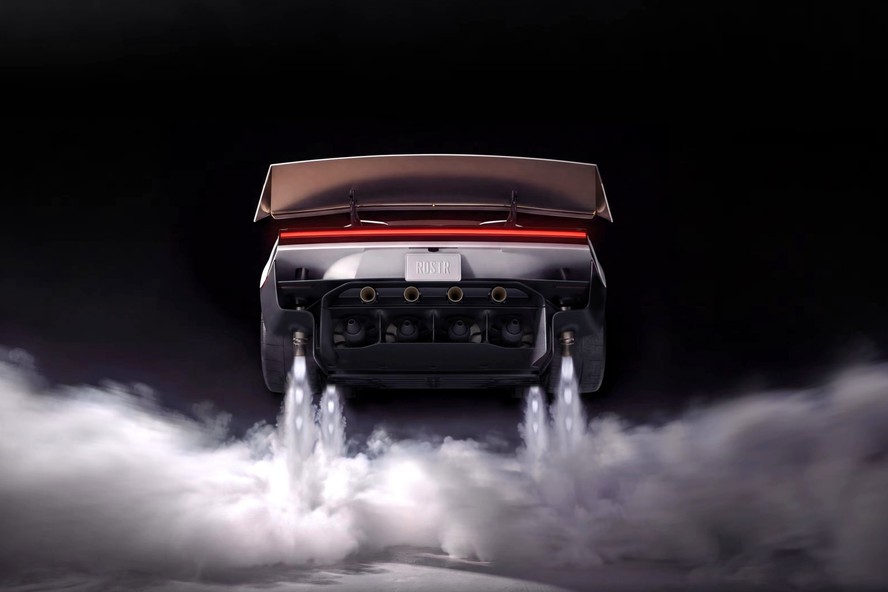
This limited-release version adds a 200-liter cold-gas thruster package with four rear-mounted nozzles. The thrusters enable 0-60 mph times under 0.9 seconds (demonstrated at 0.81 seconds during the live event). Seating remains two. The system is designed for short, high-intensity acceleration bursts and is intended primarily for track or controlled environments.
Rocket Trim – Air Ready
The most extreme configuration seats only one. An additional 400-liter pressure vessel (total capacity approximately 600 liters) and six extra thrusters positioned at the corners and front allow upward lift, yaw control, and limited controlled flight. Tesla lists 0-60 mph under 0.59 seconds and confirms the vehicle can leave the ground, perform rolls, and land under thruster control. Availability is invitation-only and restricted in many regions due to regulatory considerations.

Advanced Technologies Explained
The Roadster’s performance envelope rests on three interlocking systems: a high-power dual-motor electric drive unit, a multi-mode ground-effect suction system, and SpaceX-derived cold-gas thrusters.
Dual-Motor Powertrain and Battery Architecture
Two rear motors, each with its own inverter, deliver independent torque vectoring without a conventional differential. Planetary gearsets with an 8.4:1 ratio transmit power. The drive unit produces roughly one-third more power than the Model S Plaid while weighing approximately half as much. The battery uses specialized 4680 cells with aluminum cans, double-sided cooling, and chemistry tuned for high continuous power rather than pure energy density. Peak charge rates approach 500 kW on V4 Superchargers, enabling a 15–85% charge in about ten minutes. Maximum output from the pack reaches 1 MW.
Multi-Mode Suction and Active Aerodynamics
Fans extract air from beneath the vehicle while deployable skirts create a sealed or semi-sealed low-pressure zone. The system can generate up to approximately 2 g of downforce even at a standstill—enough to hold the car inverted on a curved surface. Active surfaces include a large rear wing, movable side and front skirts, and adjustable hood and fender panels. In Track Mode the suspension lowers and the aero package switches between high-downforce and low-drag configurations. This approach overcomes the classic limitation of conventional wings, which produce almost no downforce at low speed.
Cold-Gas Thruster System
The thrusters are pure cold-gas rockets. High-pressure air (stored in carbon-overwrapped pressure vessels at pressures historically discussed in the 5,500–10,000 psi range) is released through convergent-divergent nozzles. No combustion occurs. Expansion of the gas through the nozzle accelerates the exhaust to supersonic velocity, producing thrust according to Newton’s third law. The full Rocket package carries approximately 250 kg of air across 600 liters of tank volume and feeds ten nozzles. Peak thrust from the rear nozzles alone exceeds 80 kN—enough to accelerate the roughly 1,700 kg vehicle far beyond tire traction limits.
How the Roadster Works Scientifically
Two distinct physical regimes operate on the Roadster: ground-effect suction and cold-gas propulsion.
Ground-Effect Physics
By lowering the pressure under the car relative to ambient atmospheric pressure, the fans create a net downward force (downforce = pressure difference × area). Because the system is powered rather than purely aerodynamic, the force is available at zero velocity. Deployable skirts minimize leakage, maximizing the pressure differential. This is the same principle used historically by the Brabham BT46B “fan car,” scaled and refined with modern electric fans, active seals, and electronic control.
Cold-Gas Propulsion Physics
Thrust is generated by the momentum flux of the exhaust: F = ṁ × v_e + (p_e – p_a) × A_e, where ṁ is mass flow rate, v_e is effective exhaust velocity, p_e and p_a are exit and ambient pressures, and A_e is nozzle exit area. For cold air expanded from high pressure, specific impulse at sea level is typically 50–70 seconds—far lower than chemical rockets but sufficient for short bursts because the stored mass is large and the required impulse is modest. The nozzles operate in the dense atmosphere, so expansion ratio and throat design are optimized for sea-level rather than vacuum conditions. Precise all-electric valves allow millisecond-level control of individual thrusters, enabling attitude adjustment, lift, and soft landing.
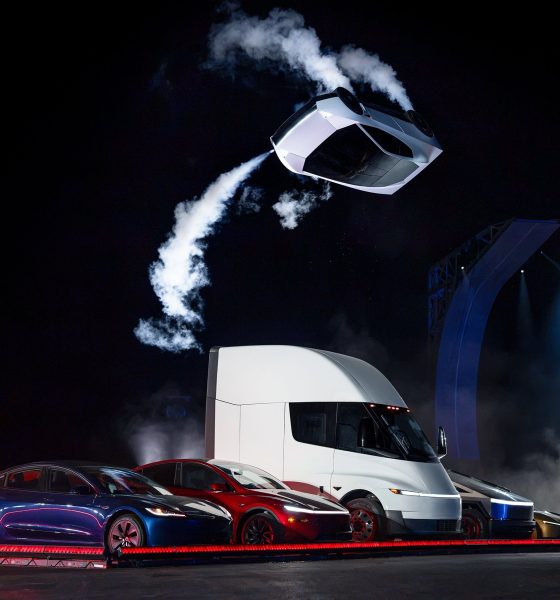
During the McGregor demonstration the vehicle drove inverted on suction alone, then used thrusters to leave the surface, rotate, and land. The combination decouples acceleration from tire friction limits and temporarily frees the car from the constraints of continuous ground contact.
Best Practices & Real-World Application
The Performance trim is intended for public roads and track days where regulatory approval is straightforward. Drivers should treat the suction system as a traction-enhancement tool that improves cornering and braking at any speed, while remaining mindful that extreme downforce increases tire and suspension loads. The Thrust and Rocket packages are best viewed as specialized performance tools for controlled environments. Cold-gas systems have finite impulse; each full-power burst lasts only a few seconds before tank pressure drops, and recharging the vessels from ambient air requires time and energy.
From an engineering standpoint, the Roadster illustrates several best practices: extreme mass reduction through structural integration of seats and use of magnesium, titanium, and carbon fiber; independent wheel torque control for precise handling; and the deliberate integration of aerospace-grade pressure vessels and actuators into an automotive platform. Future applications of similar technology could include emergency vehicle stabilization, extreme off-road platforms, or limited-flight inspection vehicles, provided regulatory frameworks evolve to accommodate short-duration aerial capability.
Original Presentation Video
The official Tesla Roadster reveal event, including the inverted ramp demonstration, aerial maneuvers, and live 0-60 mph runs, is available below.
Key timestamps include the ramp demonstration (approximately 6:03), kickflip/flight sequence (10:56), design overview (12:47), aero discussion (14:38), and acceleration runs (15:58).
Conclusion
The 2026 Tesla Roadster represents a deliberate fusion of high-performance electric vehicle engineering and SpaceX cold-gas propulsion technology. By combining a megawatt-class dual-motor powertrain, zero-speed downforce generation, and controlled thruster augmentation, Tesla has created a vehicle that operates at the boundary of conventional automotive physics. While range and top-speed figures are more conservative than the original 2017 projections, the demonstrated ability to accelerate, stick, and briefly fly has redefined expectations for production cars. With production targeted for 2028, the Roadster stands as both a technological showcase and a statement that the limits of ground-bound vehicles are still being rewritten.